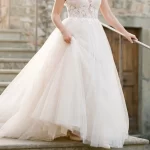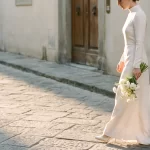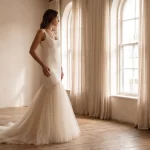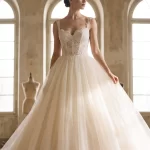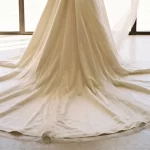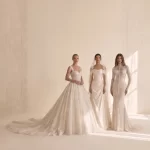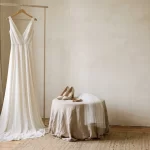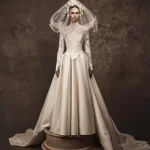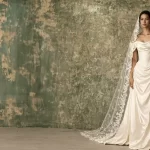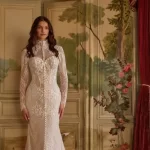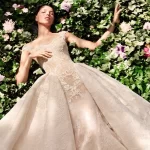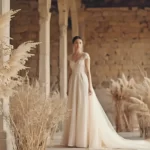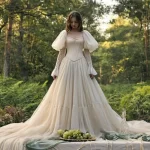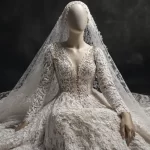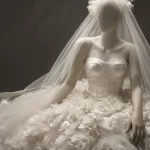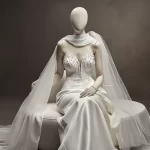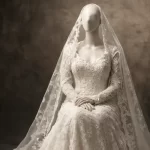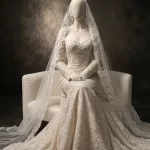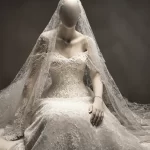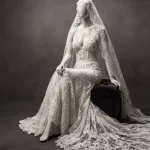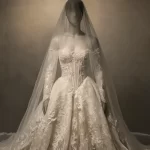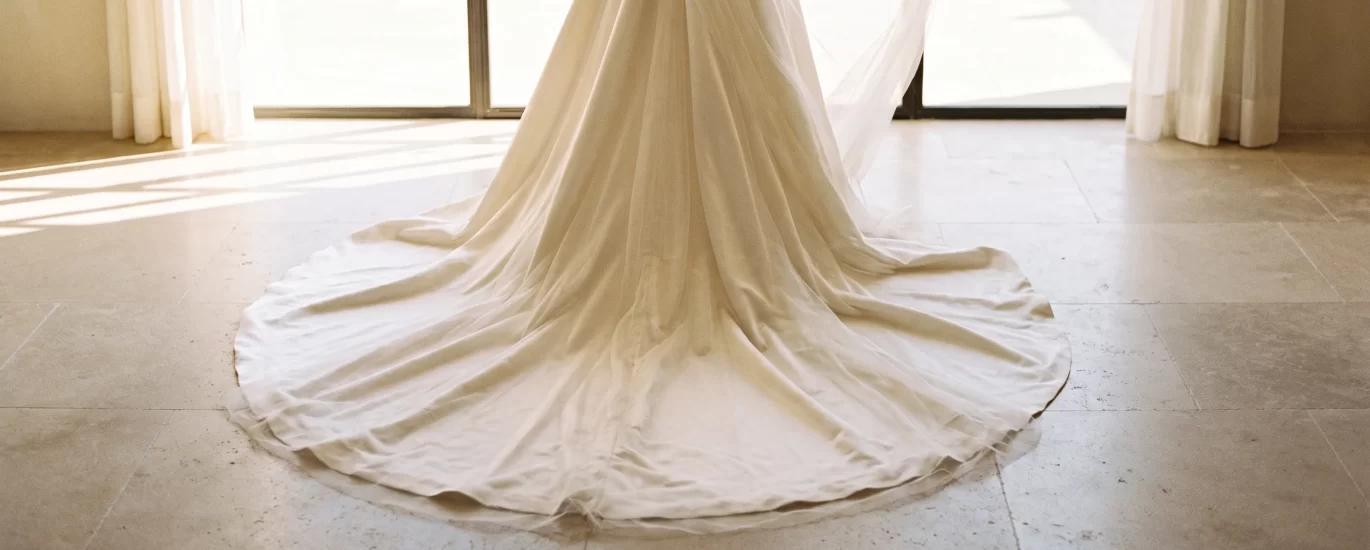
A wedding dress train guide might seem like a minor reference point — until you realize that the train is often the single most photographed detail of the entire gown. It shapes the ceremony entrance, fills the aisle, and defines the overall impression the dress makes from behind.
Understanding the differences between each train length makes this decision far easier than most brides expect.
Why the Train Matters
The train does three things: it adds drama to the silhouette, it photographs beautifully in motion, and it signals the formality of the occasion. A longer train creates a more ceremonial, formal atmosphere. A shorter or no-train option keeps things relaxed and practical.
The right choice depends on your venue, your silhouette, and how much you want to manage the dress throughout the day.
Sweep Train: The Understated Option
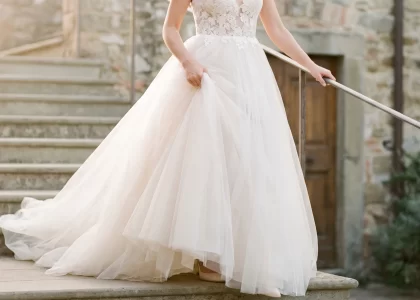
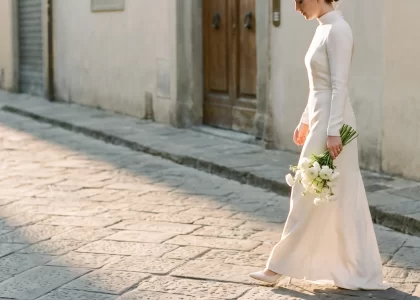
A sweep train barely grazes the floor — just a few centimetres behind the hem at the back. It adds length and a soft finishing line without any of the weight or management of a longer train.
Best for: relaxed, outdoor, or intimate weddings where practicality matters as much as aesthetics.
Chapel Train: The Most Popular Choice
The chapel train extends roughly one metre behind the bride and is the most common choice for formal weddings. It creates a beautiful sweep down the aisle without becoming difficult to move in.
This train photographs exceptionally well from behind and works across nearly every silhouette.
Best for: brides who want visible drama without the commitment of a very long train.
Semi-Cathedral Train: Between Chapel and Cathedral
The semi-cathedral train sits between the chapel and cathedral lengths — typically around one and a half metres. It adds more presence than a chapel train while remaining more manageable than a full cathedral.
Best for: brides who want an elevated look without the complexity of a very long train.
Cathedral Train: The Grand Statement
A cathedral train extends two metres or more behind the bride. This is the most formal and dramatic option, traditionally associated with royal and black-tie weddings.
Managing a cathedral train requires practice, and it works best with a structured silhouette and a formal ceremony venue.
Best for: brides planning a large, formal wedding in a significant venue who want maximum impact.
Royal or Monarch Train: The Most Dramatic Option
A royal train extends beyond two metres — sometimes three or more. This is the most formal option in any wedding dress train guide and is typically reserved for grand ceremonial settings.
It requires assistance to arrange and is not practical for most reception settings without gathering or removal.
Best for: landmark occasions or brides who specifically want the most dramatic entrance possible.
Detachable Train: The Practical Solution
A detachable train attaches to the gown at the waist or back and can be removed for the reception. This is an increasingly popular option because it gives brides the full dramatic effect of a long train for the ceremony and a clean silhouette for dancing and dinner afterward.
Best for: brides who want the drama of a cathedral or chapel train without wearing it all day.
How to Choose Using This Train Guide
The simplest rule: match the train to the venue. A cathedral in a garden setting will look out of proportion. A sweep train in a grand basilica may feel incomplete. Beyond that, choose what photographs the way you want to be remembered.
At Soft & Sophisticated, several of our gowns — including the Celeste from the Aeterna Collection — are designed with dramatic trains that move beautifully in motion. The train is never an afterthought; it’s one of the first elements considered when designing a silhouette.
The best wedding dress train guide is one that gives you enough information to make the decision feel simple rather than overwhelming. Know your venue, try a few lengths in person, and trust what moves you — literally and otherwise.