Wedding dress alterations are one of the most misunderstood parts of the bridal process. Most brides assume alterations are minor adjustments — a quick hem, a few stitches — but in reality, nearly every wedding dress requires tailoring to fit properly. Understanding what wedding dress alterations involve, when to start, and what changes are possible helps you plan your timeline and budget more accurately.
This guide covers the most common alterations, how many fittings to expect, when to schedule them, and what to ask your tailor before the first appointment.
What Are Wedding Dress Alterations?
Wedding dress alterations are the adjustments made to a gown after it is ordered or purchased to ensure it fits your body perfectly. Even made-to-measure gowns typically require some degree of alteration because body measurements can shift slightly between ordering and the wedding day, and because a perfect fit requires more than measurements alone — it requires the dress to be tailored on your actual body.
Common wedding dress alterations include hemming the skirt, taking in or letting out the bodice, adjusting strap length, adding a bustle, and refining the fit of sleeves or the waistline.
The Most Common Wedding Dress Alterations
Hemming the skirt:
This is the most common alteration. The hem is adjusted so the dress sits at the correct length when you are wearing your wedding shoes. Hemming a gown with multiple layers, a lace edge, or a long train is more complex and takes longer than hemming a simple skirt.
Taking in the bodice:
If the bodice is too loose, it can be taken in along the side seams or center back. How much can be taken in depends on the gown’s construction and whether it has boning, lining, or beading that complicates the adjustment.
Letting out the bodice:
Letting out is harder than taking in because it depends on whether the gown has extra fabric built into the seams (called seam allowance). If there is no seam allowance, the bodice cannot be let out significantly.
Adjusting strap length:
Straps can usually be shortened easily. Lengthening straps is only possible if there is extra fabric or if the tailor can add a matching fabric extension.
Adding a bustle:
A bustle is sewn in during alterations to lift the train off the floor for the reception. The type of bustle (American, French, ballroom) is decided during the first fitting based on the gown’s silhouette and train length.
Adding or removing sleeves:
Sleeves can be added to a strapless gown or removed from a sleeved gown, but this is a complex alteration that changes the entire structure of the bodice and usually requires significant reconstruction.
When to Start Wedding Dress Alterations
Start wedding dress alterations 8 to 12 weeks before the wedding. This gives your tailor enough time to complete multiple fittings and make adjustments without rushing.
If your gown requires significant structural changes — like altering a neckline, adding sleeves, or restructuring the bodice — start 12 to 16 weeks before the wedding.
Do not start alterations too early. Your body measurements may change in the final months before the wedding, and alterations made too soon may need to be redone closer to the date.
How Many Fittings Do You Need?
Most brides need 2 to 3 fittings for wedding dress alterations.
First fitting:
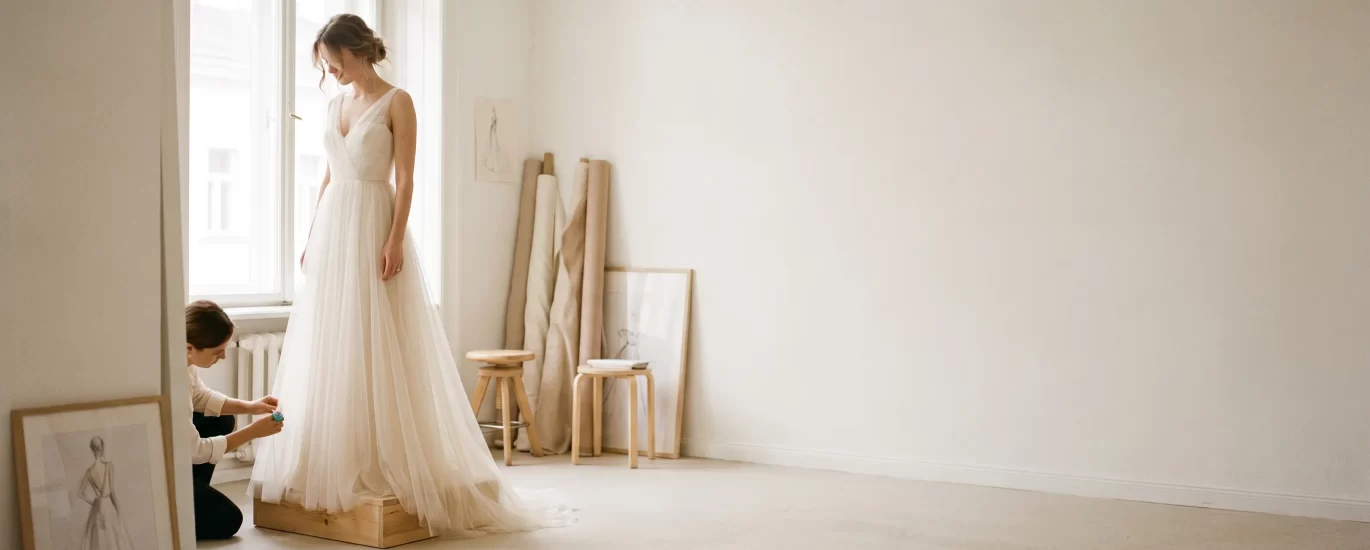
The tailor assesses what needs to be changed, pins the dress on your body, and discusses the alteration plan. Bring your wedding shoes, undergarments, and any shapewear you plan to wear on the day.
Second fitting:
The tailor has made the initial adjustments. You try the dress on again to check the fit and identify any remaining issues.
Third fitting (final):
This is the confirmation fitting. The dress should fit perfectly, and you will practice bustling the train and moving in the gown to ensure everything works as it should.
If the gown requires complex changes, you may need a fourth fitting.
What to Bring to Your First Fitting
Your wedding shoes:
Heel height directly affects the hem length. Bring the exact shoes you plan to wear or a pair with the same heel height.
Your undergarments:
Wear the bra, underwear, and shapewear you will wear on the wedding day. The wrong undergarments can make the dress fit incorrectly.
A clear idea of what feels wrong:
If the bodice feels too loose, the hem drags, or the straps dig into your shoulders, tell your tailor specifically. They cannot fix what they do not know.
An open mind:
Sometimes what you think needs to be changed is not the real issue. Trust your tailor’s assessment — they see gowns every day and know how a dress should sit on the body.
What Wedding Dress Alterations Cannot Do
Not every change is possible. Here is what most tailors cannot do:
- Significantly let out a gown that has no seam allowance
- Change a heavily beaded bodice without removing and reapplying beading (expensive and time-consuming)
- Completely restructure a gown’s silhouette (turning an A-line into a mermaid, for example)
- Alter a gown with delicate lace or hand-sewn embellishments without visible stitching
If you want major structural changes, discuss them with your tailor before ordering the gown. Some changes are easier to build into the original construction than to add later.
How Much Do Wedding Dress Alterations Cost?
Wedding dress alterations typically cost between $200 and $800 depending on the complexity of the work. Simple alterations like hemming and taking in the sides are less expensive. Adding sleeves, restructuring a bodice, or working with heavily beaded fabric costs significantly more.
Always ask for a quote at the first fitting so you know what to budget. Some ateliers include basic alterations in the gown price; others charge separately.
At Soft & Sophisticated, every gown is made to order based on your measurements, but we still include multiple fitting appointments to refine the fit on your actual body. Alterations are built into the process from the start, so you are never surprised by unexpected adjustments or costs. We walk you through every fitting and explain exactly what is being changed and why.
Wedding dress alterations are not optional — they are an essential part of the bridal process. Nearly every gown requires some level of tailoring to fit perfectly. Start the process 8 to 12 weeks before your wedding, bring the right shoes and undergarments to every fitting, and trust your tailor’s expertise. A well-altered gown is the difference between a dress that looks good and a dress that feels completely right.
—