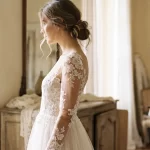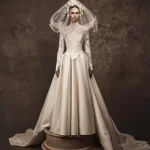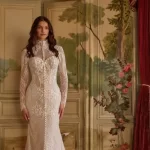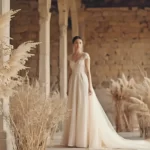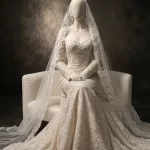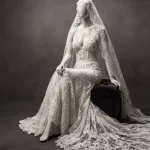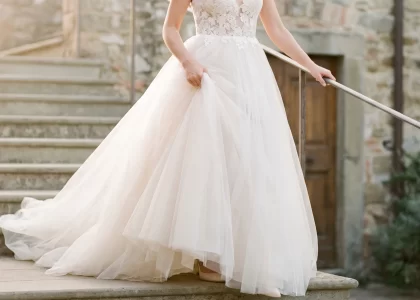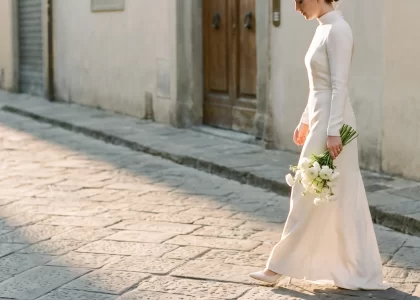
Knowing how to bustle a wedding dress is one of those practical details that rarely gets discussed until the final fitting — and by then, most brides are already overwhelmed. Bustling a wedding dress lifts and secures the train so you can move freely during the reception without tripping or dragging fabric across the floor.
This guide explains what bustling is, the most common bustle types, when to bustle, and what you need to practice before the wedding day.
What Does It Mean to Bustle a Wedding Dress?
Bustling a wedding dress means gathering and securing the train of the gown at the back or sides using a series of hooks, buttons, ties, or loops sewn into the dress during alterations. The bustle lifts the train off the ground, transforming the gown from its ceremony silhouette into a more practical reception look.
A properly bustled dress should sit neatly at the back without bulk, bunching, or visible strain on the fabric.
The Most Common Bustle Types
There are several ways to bustle a wedding dress, and the right one depends on the gown’s silhouette, train length, and fabric.
American Bustle (Over Bustle):
The train is lifted and secured over the back of the gown using buttons or hooks. The train drapes over the back in gathered folds, creating a slightly fuller silhouette from behind. This is the most common bustle type and works well with A-line, ball gown, and chapel-length trains.
French Bustle (Under Bustle):
The train is tucked under the gown and secured from the inside using ties or loops. The result is a cleaner, more streamlined look from behind because the train is hidden beneath the skirt rather than draped on top. This bustle works well with fitted silhouettes like mermaid and sheath gowns.
Ballroom Bustle:
A series of multiple pickup points create a scalloped, draped effect across the back of the gown. This bustle is more decorative and works best with very long cathedral or semi-cathedral trains. It requires more time and practice to execute correctly.
Bow Bustle:
The train is secured using ribbon ties that create a visible bow at the back. This is one of the simpler bustle types and works well with less structured fabrics like tulle and chiffon.
When Should You Bustle Your Wedding Dress?
The train is bustled after the ceremony and before the reception. The timing depends on your schedule, but most brides bustle during the cocktail hour or immediately after formal photographs.
Never attempt to bustle the dress yourself — assign someone you trust (a bridesmaid, your mother, or a wedding coordinator) to do it for you. Make sure they practice at your final fitting so they understand the exact sequence of hooks, buttons, or ties.
How to Practice Bustling Before the Wedding
At your final fitting, ask your tailor to show you and your designated helper exactly how the bustle works. Take photos or a short video of the process from multiple angles so your helper can refer back to it if needed on the day.
Practice at least once with the person who will be bustling the dress on the wedding day. Even a simple American bustle can feel complicated under pressure, especially if the lighting is dim or the dress has multiple pickup points.
What to Ask Your Tailor
When discussing how to bustle a wedding dress with your tailor, ask these questions:
- Which bustle type works best with my gown’s silhouette and train length?
- How many pickup points will be sewn in?
- Can the bustle be done by one person or does it require two?
- Can I practice bustling the dress at my final fitting?
- What happens if a button or hook breaks on the day — is there a backup?
A good tailor will walk you through the entire process and mark the bustle points clearly so your helper can locate them easily on the wedding day.
Common Mistakes to Avoid
Waiting until the last minute to decide on the bustle type.
The bustle is sewn in during final alterations, so waiting too long means your tailor may not have time to execute the style you want.
Not practicing before the wedding.
Even the simplest bustle can feel impossible if no one knows how it works.
Trying to bustle the dress yourself.
You cannot reach the back of your dress easily while wearing it. Always assign someone to help.
Choosing a complicated bustle for a simple gown.
Match the bustle to the gown. A minimalist crepe sheath does not need a ballroom bustle — a simple French under-bustle is cleaner and more appropriate.
At Soft & Sophisticated, bustling is discussed and planned during the final fitting appointment. We walk each bride and her designated helper through the exact process, demonstrate the bustle multiple times, and provide clear instructions so there is no confusion on the wedding day. For gowns with longer trains, we recommend scheduling a dedicated bustling practice session.
Knowing how to bustle a wedding dress is not complicated, but it does require preparation. Choose the bustle type that suits your gown, practice it at least once before the wedding, and assign someone you trust to help you on the day. A well-executed bustle takes two minutes and lets you move freely through the reception without a second thought about your train.