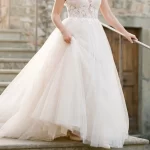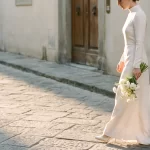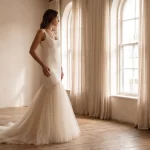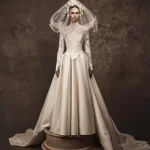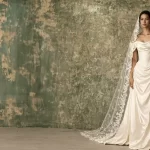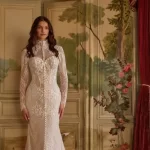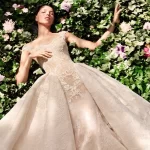
Two made-to-order wedding dresses can differ in price by a factor of five, and the difference is almost never visible in a photograph. Price in bridal is driven by four things: fabric, handwork hours, pattern cutting and the number of fittings. Everything else – colour, size, silhouette – is close to irrelevant.
This guide explains what each factor costs in practice, without quoting prices. Prices vary by atelier and by year; the structure underneath does not.
What actually drives the price of a wedding dress?
Four factors, in descending order of impact:
- Fabric — the single largest variable, and the one brides underestimate most
- Handwork hours — beading, appliqué and hand-finishing
- Pattern cutting — a unique pattern per bride versus a standard block
- Fittings — how many, and who attends them
Colour, size and silhouette affect cost marginally. Location affects it moderately. Brand name affects it considerably, but that is marketing, not making.
Fabric
Lace is where the cost difference is most extreme. A metre of fine Chantilly and a metre of guipure can differ in price by a factor of eight, and both are called “lace” on a label.
- Silk versus polyester — a silk crepe and a polyester crepe look similar on a hanger and behave completely differently on a body and in photographs. The price difference is roughly three to four times.
- Lace type — Chantilly is the least expensive traditional lace; guipure and Alençon are the most expensive, because both require more production steps.
- Beading on the fabric — fabric that arrives already beaded costs more than plain fabric, but less than plain fabric plus the labour of hand-beading it.
- Yardage — a ball gown uses three to five times the fabric of a sheath. This is why silhouette does affect price, but through fabric volume rather than design complexity.
A gown in silk crepe with no lace can cost more than a gown in polyester lace with heavy embellishment. Fabric quality is invisible in a photograph and obvious in person.
Handwork hours
Handwork is measured in hours, and hours are the most predictable cost in the whole process.
| Element | Approximate handwork |
|---|---|
| Hand-applied lace appliqué across a bodice | 15–25 hours |
| Appliqué continuing down a full skirt | 30–60 hours |
| Hand-beading a bodice | 20–40 hours |
| Beaded or lace-edged veil | 10–30 hours |
| Hand-rolled hem on a tulle skirt | 8–15 hours |
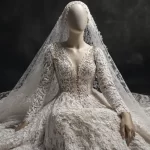
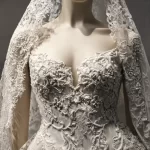
This is the difference between a gown that reads as detailed from across a room and one that only reads as detailed from a metre away. It is also the part of the price that is hardest to argue with, because it is simply time.
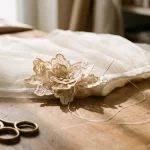
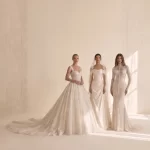
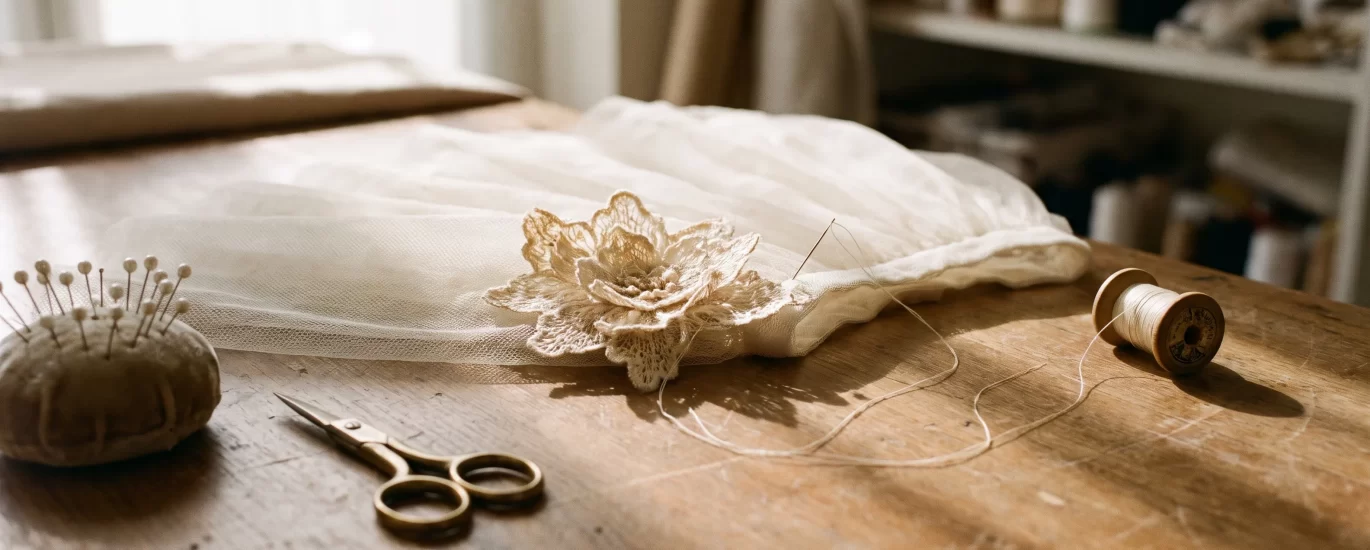
In the Eternal Blossom 2027 collection, the three-dimensional floral appliqué is applied entirely by hand, motif by motif. That work is the majority of the gown’s cost — not the fabric, and not the design.
Pattern cutting
A standard-size gown uses a pattern block that already exists, graded across sizes. A made-to-order gown uses a pattern cut for one body.
- Standard block — the pattern is adjusted at the seams during fitting
- Unique pattern — the pattern is drafted from your measurements before any fabric is cut
- Toile — a test garment in cotton, made from the unique pattern and fitted before the real fabric is touched
A toile adds cost and time and is the reason a made-to-order gown fits a body it was not sampled on. It is also the step most often skipped by cheaper makers, which is why the fit at collection differs from the fit at the fitting.
Fittings
Every fitting consumes atelier time, a fitting room and a qualified fitter. Three fittings is standard for a made-to-order gown; a structured couture piece may need five.
The cost is not only the appointment. It is also the alterations between appointments, which are unpicked and re-sewn by hand.
Ateliers that include unlimited fittings are pricing that risk into the gown. Ateliers that charge per fitting are usually cheaper upfront and more expensive in total.
What does not affect the price
- Colour. Dyeing to a shade is a mill order, not a couture step. The difference is usually under ten percent, often zero.
- Size. A gown in a larger size uses more fabric, but the difference is minor compared to the fabric type.
- Your measurements. A non-standard body is not more expensive to fit than a standard one, because a made-to-order pattern is unique either way.
Why is ready-to-wear cheaper?
Ready-to-wear is cheaper because the cost is spread across many identical garments. One pattern, one sample, one production run, many sales. The bride pays for one unit of a shared cost.
A made-to-order gown has no shared cost. The pattern, the toile, the fittings and the handwork all belong to one garment for one person. That is what the price difference actually buys.
Questions worth asking an atelier
- What lace is this, and where is it woven?
- How many hours of handwork are in this gown?
- Is a toile made before the fabric is cut?
- How many fittings are included, and what happens if I need more?
- What is included in the price — veil, alterations, storage, pressing?
- What is not included?
The last two matter most. A lower headline price with alterations, pressing and storage charged separately is often more expensive than a higher price with everything included.
Frequently asked questions
Why are wedding dresses so expensive?
Because most of the cost is labour, not material. Handwork, pattern cutting and multiple fittings are all time, and time does not scale down for a single garment.
Does a bigger wedding dress cost more?
Slightly, because it uses more fabric. The difference is small compared to the difference between fabric types.
Is made-to-order cheaper than couture?
Usually. Made-to-order follows a house design adjusted to your measurements. Couture involves a unique design, a toile and more fittings, which is why it costs more.
Does the colour of a wedding dress affect the price?
Rarely. Dyeing to a shade is a mill order rather than a couture step, and the difference is usually under ten percent.
Why is the same dress cheaper online?
Because it is not the same dress. The fabric, the construction and the fittings are where the cost lives, and none of them are visible in a product photograph.bric, the construction and the fittings are where the cost lives, and none of them are visible in a product photograph.